
TL;DR
Heineken’s global pricing relied on a manual web of emails and spreadsheets, causing approvals to drag on for months.
I slashed approval times from 4 -5 weeks to weeks and created a searchable history for every pricing decision by designing the GI Pricing Tool to move this workflow out of the inbox to a centralized platform.
My Role:
UI/UX Designer
Timeline:
8 Months (Discovery to Final product)
Team:
Collaborated with 1 UX Lead, 1 UI Designer, BA, PM, and Technical Architect (managing FE/BE/QA)
The Context
A shift in power required a shift in speed.
The Alcohol Beverage industry in the USA has undergone a fundamental shift. It is no longer "Supplier-Led" (where we dictate the market); it is "Distributor-Led." This means Heineken USA (HUSA) needs to be reactive, adjusting prices immediately to stay competitive.
But our internal tools weren't built for speed. We were managing 150 SKUs and 50,000 price points across 50 states using tools designed for a slower era.
The Discovery: Mapping the Chaos
How does a price change take 5 months?
When I audited the "As-Is" process, I didn't find a software problem; I found a communication breakdown. The workflow was a fragile chain of manual handoffs:
The Trigger:
A Distributor calls or emails a Market Manager with a price change request.
The Calculation:
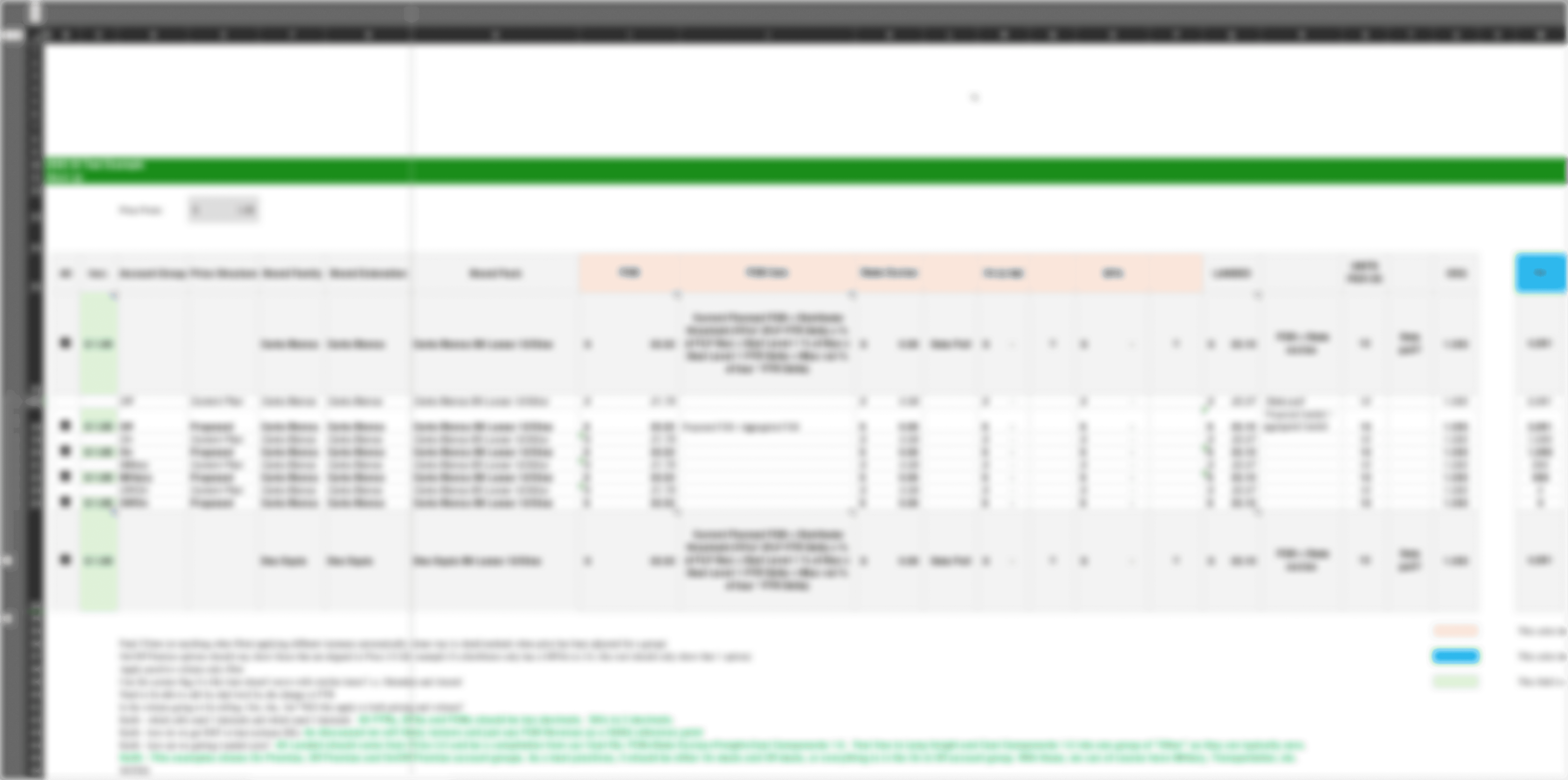
The Market Manager opens an Excel file (GI Template), manually checks competitor SKUs, and drafts a new price.
The "Monday" Trap:
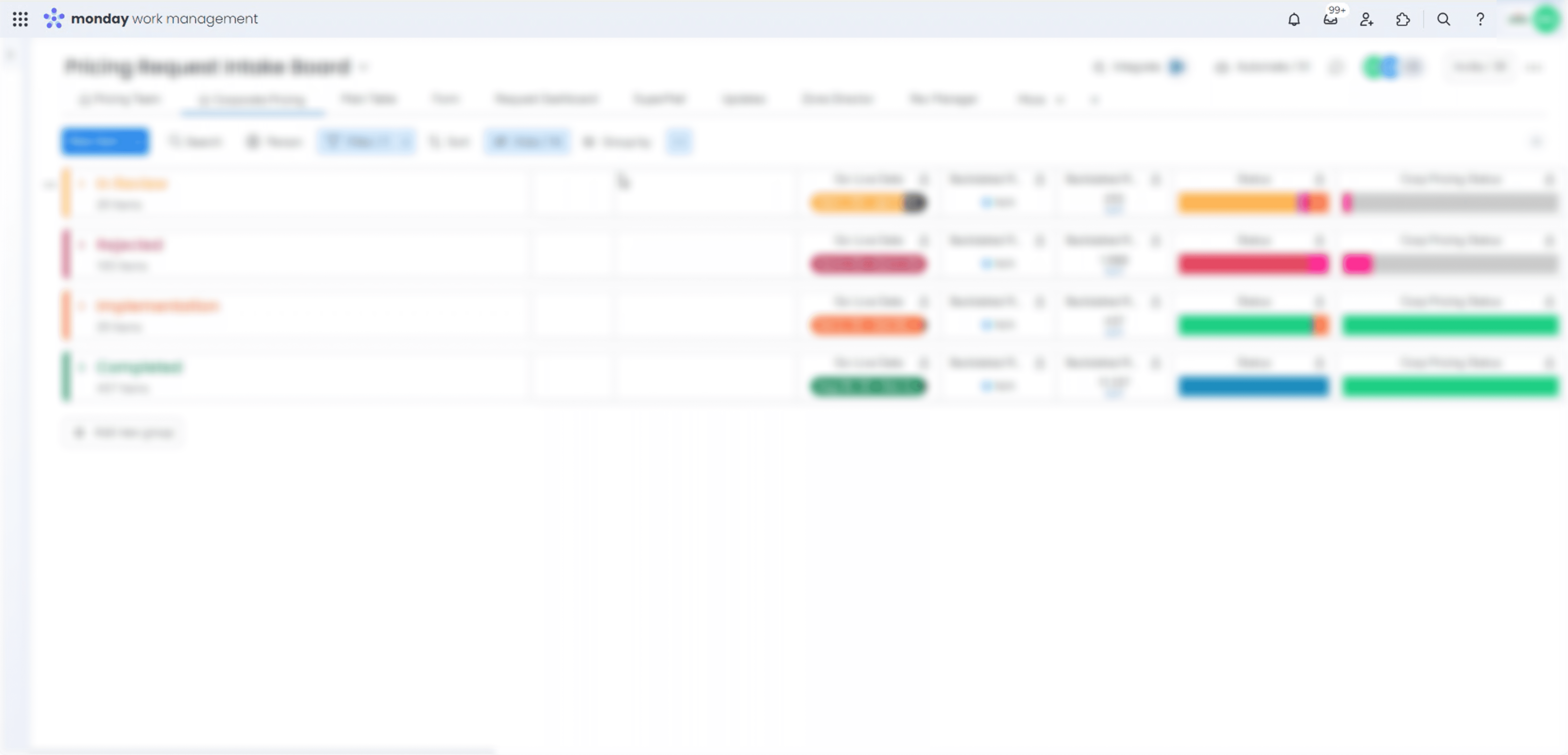
They upload this Excel to Monday.com. The Pricing Team picks it up, manually checks it against business guardrails, and inevitably sends it back for corrections.
The Black Box:
Once validated, it goes to Corporate for another review, then uploaded as a "draft" into a legacy system (VIP Pricing 2.0), then approved by the Revenue Margin Growth (RMG) team, and finally fed into SAP.
The User Pain Point:
If a Market Manager made one small error in the Excel sheet (e.g., violating a margin guardrail), the entire process would reset. There was no instant feedback loop. They were flying blind.
The Strategy
Guardrails, not Gatekeepers.
My design strategy focused on three pillars to solve the "4-month lag":
Proactive Validation:
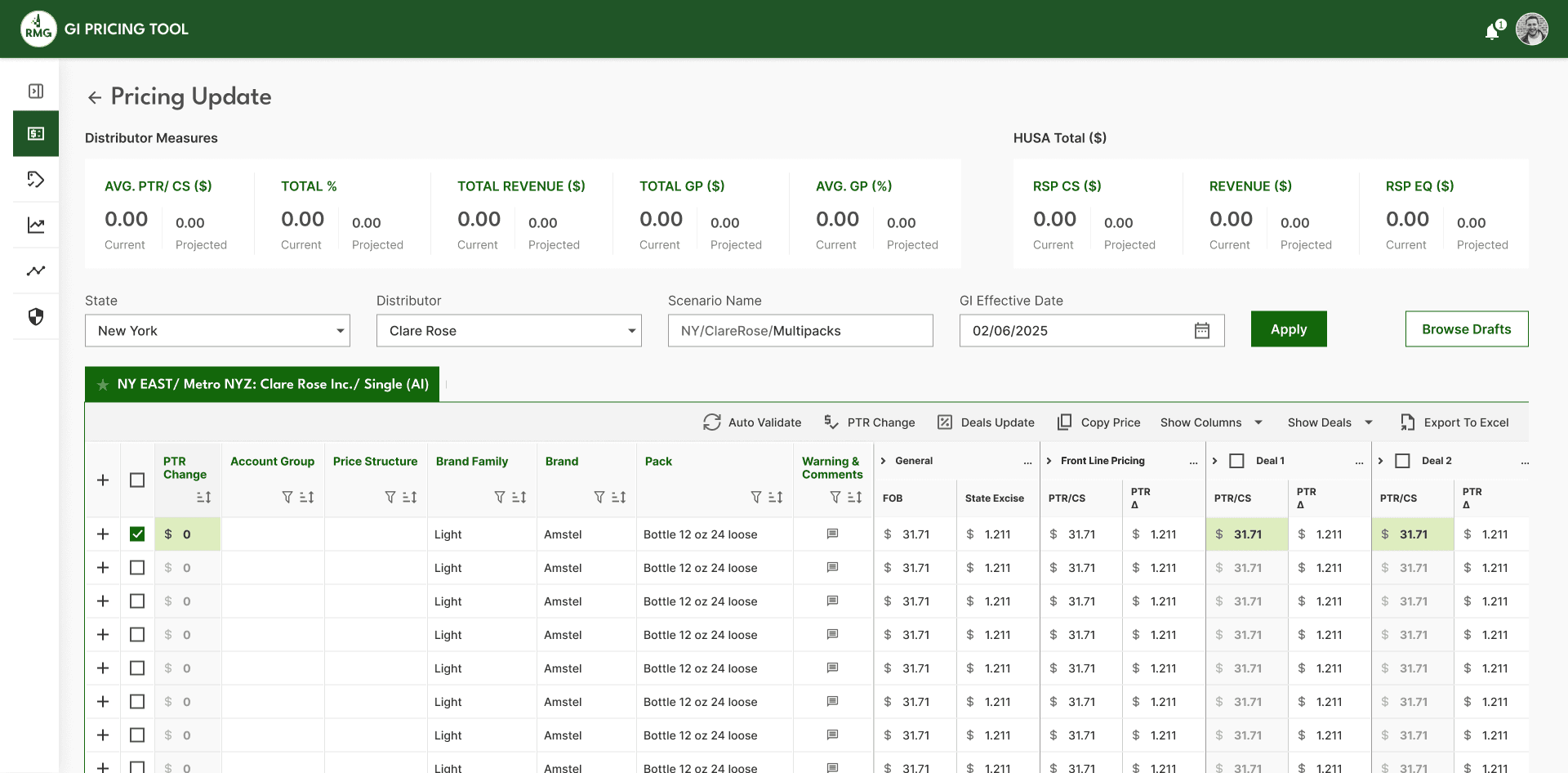
Instead of waiting for a Pricing Manager to reject a spreadsheet on Monday.com, the new tool runs Auto-Validation instantly. If a user enters a price that violates a business rule, the system warns them before they submit.
Unified Workflow:
We moved the conversation out of email and Monday.com. The "Initiate," "Review," and "Approve" steps now happen in one linear timeline visible to all personas—from the Market Manager to the VP of Sales.
Simulation:
We introduced a Pricing & Impact Dashboard. Users can now simulate a price change and see the "Blended Margin" impact immediately (integrating Volume and Case Equivalents), rather than guessing the outcome.
The Solution: Designing the Ecosystem
Structuring the Ecosystem
The complexity of HUSA’s pricing required a modular approach. I organized the platform into distinct functional zones to reduce cognitive load.
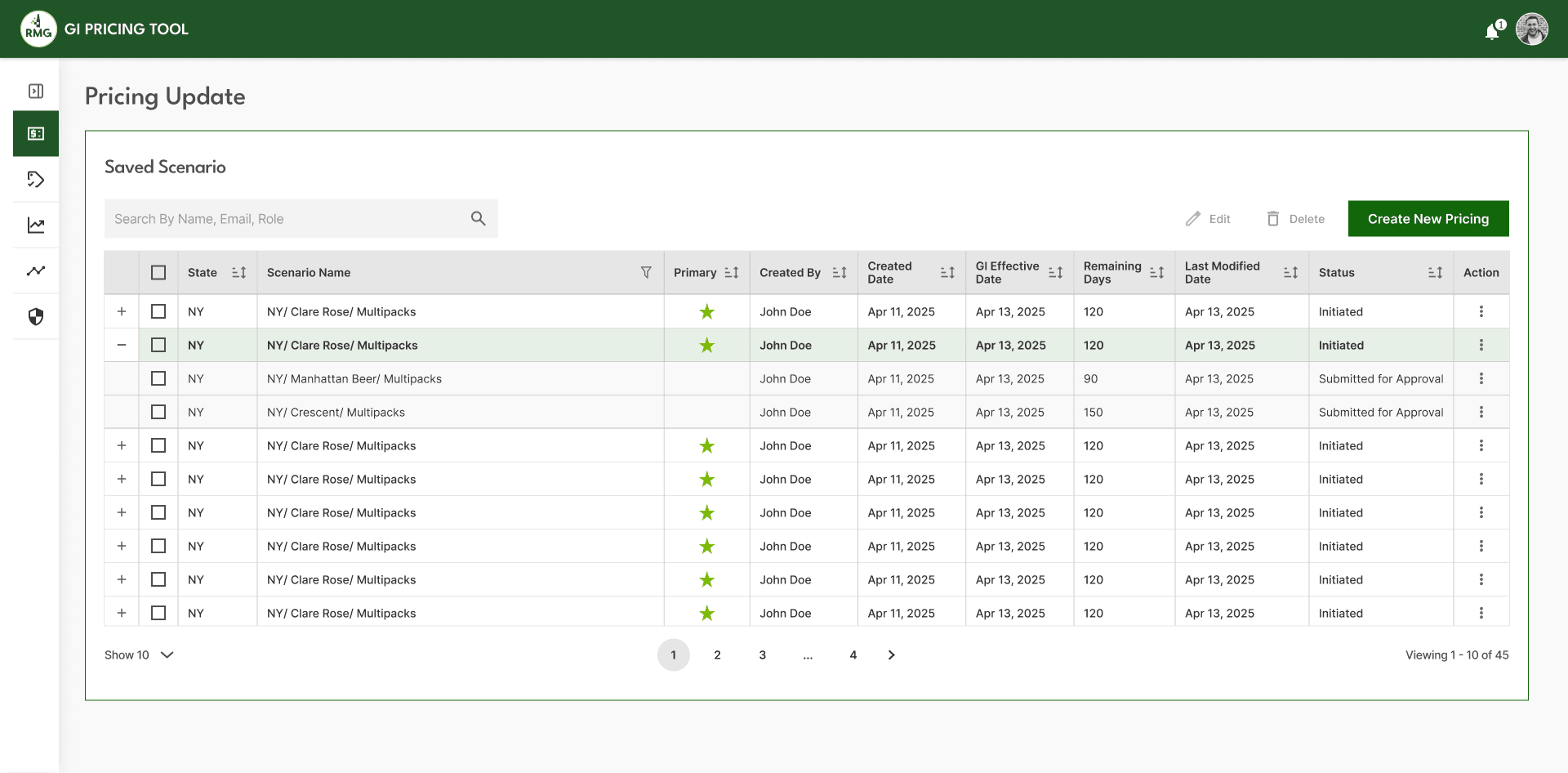
Multiple Drafts
Multiple drafts can be created against a single pricing
Metric Targeted:
I designed the ability to create multiple drafts so that the most suitable version can then be sent for approval
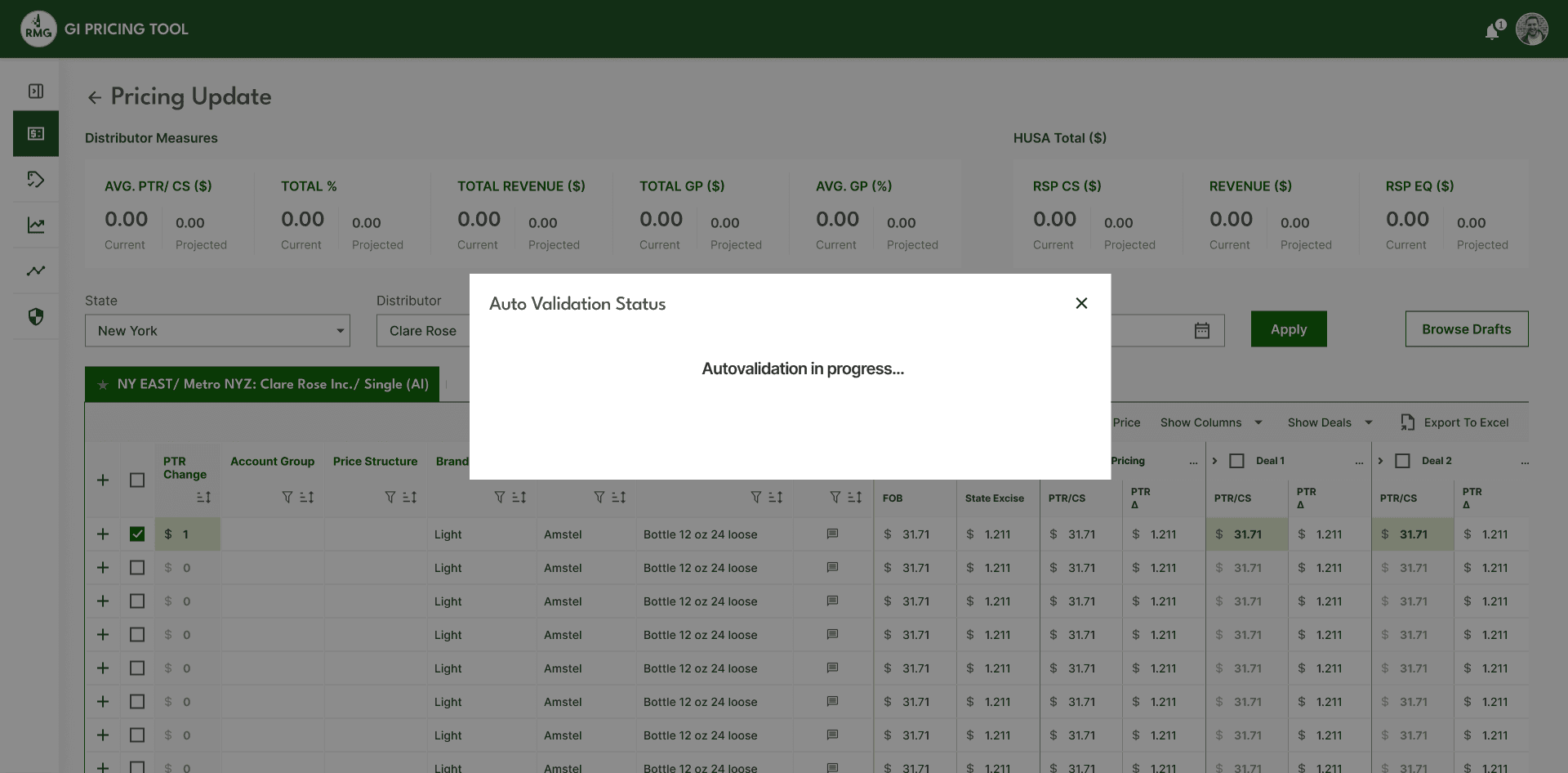
The Auto Validation Functionality
Manual entry leads to errors.
Metric Targeted:
I designed the input fields to be rule-aware. Based on the Auto Validation module, fields turn red/orange with specific error messages (e.g., "Margin falls below state minimum") in real-time. This essentially automates the "Pricing Team" review step.
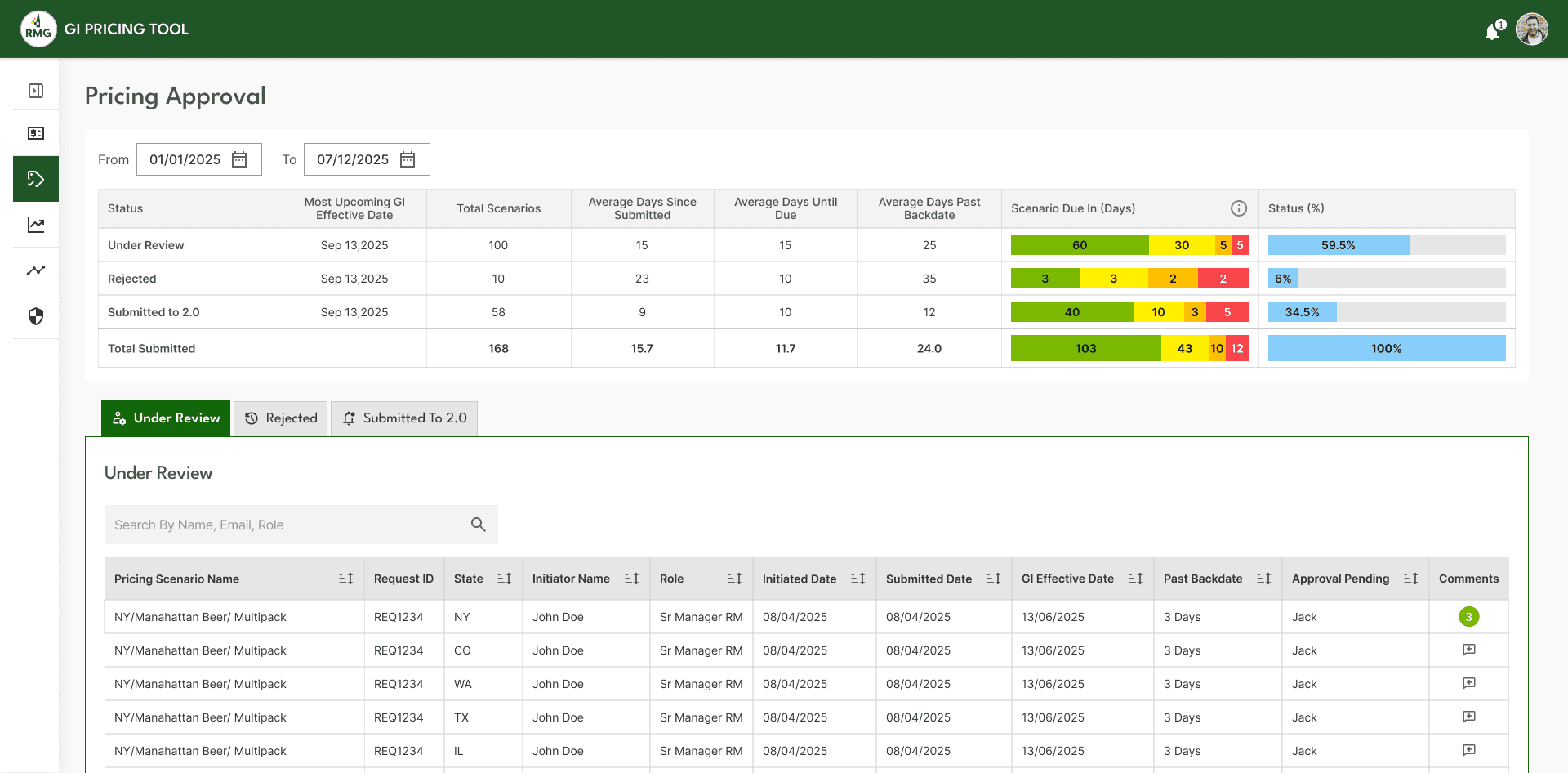
The Approval Chain
Market Manager → Sr. Pricing Manager → Director → RMG Head.
Metric Targeted:
Users can now create "Draft Deals." This allows for a sandbox environment where they can tweak numbers before formally entering the approval workflow.
The Reflection
Designing for "Offline" Users. The biggest challenge wasn't the data complexity; it was changing the behavior of users who have relied on Excel and phone calls for decades. By focusing on simulating the familiarity of a spreadsheet while adding the safety of software guardrails, we bridge the gap between "how it’s always been done" and "how it should be done."
Even though we built a new platform, we still had to rely on the core video streaming infrastructure (YouTube Embed) for the actual feed.
Since we couldn't change the video player, I focused all interaction design on the Overlay Layer (the Lobby and the Spectrum), ensuring the experience felt custom even though the video tech was standard.
The Outcome
From Reactive to Strategic.
By October 2025, the GI Pricing Tool will effectively retire the "Monday.com + Excel" workflow.
Efficiency:
We are projecting a reduction in the price-increase lifecycle from 4-5 months down to a streamlined digital flow.
Accuracy:
By integrating directly with VIP Pricing 2.0 via API, we eliminate the manual data entry errors that used to occur during system transfers.
Visibility:
For the first time, the RMG Head and Sales VPs have a "Single Source of Truth" to report on pricing effectiveness without asking someone to compile a report.
The Results (Impact)
Even though we built a new platform, we still had to rely on the core video streaming infrastructure (YouTube Embed) for the actual feed.
The 0-to-1 launch
Successfully designed and launched the first-ever dedicated digital home for LCS Camps, retiring the legacy manual email workflows.
operational efficiency
Reduced the time-to-organize for internal teams by centralizing scheduling and registration.
Growth
The "Camps" module is now being evaluated as the standard for unifying the "Stellar" program in future roadmap phases.
adoption
The gamified lobby feature drove a ~20% increase in pre-session retention compared to the previous baseline of generic video calls.
Retrospective
What I Learned "Building a platform from scratch taught me that structure creates value. By moving 'Camps' out of the inbox and into a designed Marketplace, we didn't just make it easier to join; we elevated the perceived value of the entire program. The 'medium' became the 'message'."