
Shipped!✨
UX + UI
B2C
Google Ads Partner Enablement Marketplace - Camps
We built the Camps from scratch shaping the product’s core user experience, brand identity, and visual system from experiment to launch.

What is camps?
The "Camps" is a centralised digital ecosystem which helps better optimise the marketing excellence for Google’s Large Customer Sales (LCS) partners and global agencies by tailored intensive, high-stakes strategic enablement workshops.
Ex: Agencies handling clients like Nike, Samsung, etc, whose annual Ad spends are massive.
Year: 2024
My Role: UI/UX Designer (0-to-1 Architecture & Interaction Strategy)
Overview
The "Camps" Program
Designed exclusively for agencies handling high-volume Large Customer Sales (LCS) portfolios, "Camps" connects Ads practitioners directly with Google Ads Product Experts. This ensures that the teams managing Google's largest accounts are upskilled on the latest innovations ultimately boosting campaign performances.
But the "Camps" program had no digital home. It was run entirely offline via manual emails, calendar invites, and generic video links.
The People Involved
In this context, the accounts contributing to the Google LCS Portfolio
Facilitators
(Google Ads)
Google Ads Product Experts facilitating the camps sessions.
Account Managers
(marketing agency)
Strategic leads who manage the Google Ads Experts team for a particular account in LCS.
Practitioners
(marketing agency)
Google Ads Experts under the account manager, managing the Ads campaigns of that particular account in LCS.
The Process - then
1
A Google form is sent to the particular Account Manager(AM) over Gmail, to collect the expectations and availability of his team for the camp.
Facilitator
2
The Gmail is forwarded with practitioners for further communication.
AM
3
The expectations and availability for the camp are communicated via the Google form.
Practitioners
4
The camp is scheduled on Gmeet and the Practitoners are notified the same through Gmail.
Facilitator
5
The Practitioners attend the camp on Gmeet.
Facilitator
6
After the camp, a Google survey form is sent out to collect the camp's feedback.
Facilitator
7
The feedback for the camp is expressed in the Google form.
Practitioners
8
The followups on feedback for the camp and other queries are sent over Gmail.
Facilitator
The Problem
The "Offline" Chaos
While its sibling product program "Stellar" (Masterclasses) had a dedicated home on "Google Ads on Air," the "Camps" (Large Customer Strategic Bootcamps) were operationally primitive.
The Operational Problem
There was no platform. The entire "Camps" experience was fragmented and didn't feel premium enough:
Manual Workflow:
Facilitator had to manually send emails, manage calendar invites, and paste generic Google Meet links.
No Discovery:
Practitioners couldn't browse upcoming camps; they had to wait to be invited.
Zero Brand Value:
High-value Account Practitioners were attending premium strategy sessions via generic links, degrading the perceived value of the content.
The User Problem
We realised that existing Camps sessions weren't just a cognitive challenge, it’s an emotional one.
Practitioners were often overwhelmed, navigating a labyrinth of calendar invites and static slide decks.
cognitive overload
Passive, slide-dense session overwhelmed practitioners, causing cognitive fatigue that stalled product engagement and adoption.
Adoption and Upgradation friction
Requiring practitioners to switch platforms to apply recommendations created friction that stalled product adoption and account upgrades.
High Dropoff rate
High absenteeism and drop-off because the session wasn't intuitive.
Re-watching Struggle
Rewatching sessions required endless searching through emails. Without a central hub, searching for a recording was hard to find and easily lost.
post-Camp Communication lag
Asking questions after a session was a hassle. Practitioners had to wait for a feedback form just to raise a doubt and then follow up through slow email threads.
The Strategy
We needed to shift the product vision from Consumption to Execution.
"How might we build a 0-to-1 dedicated platform for Camps that elevates a manual, offline process into a premium, scalable digital ecosystem?"
Discovery & Strategy
Gap Analysis:
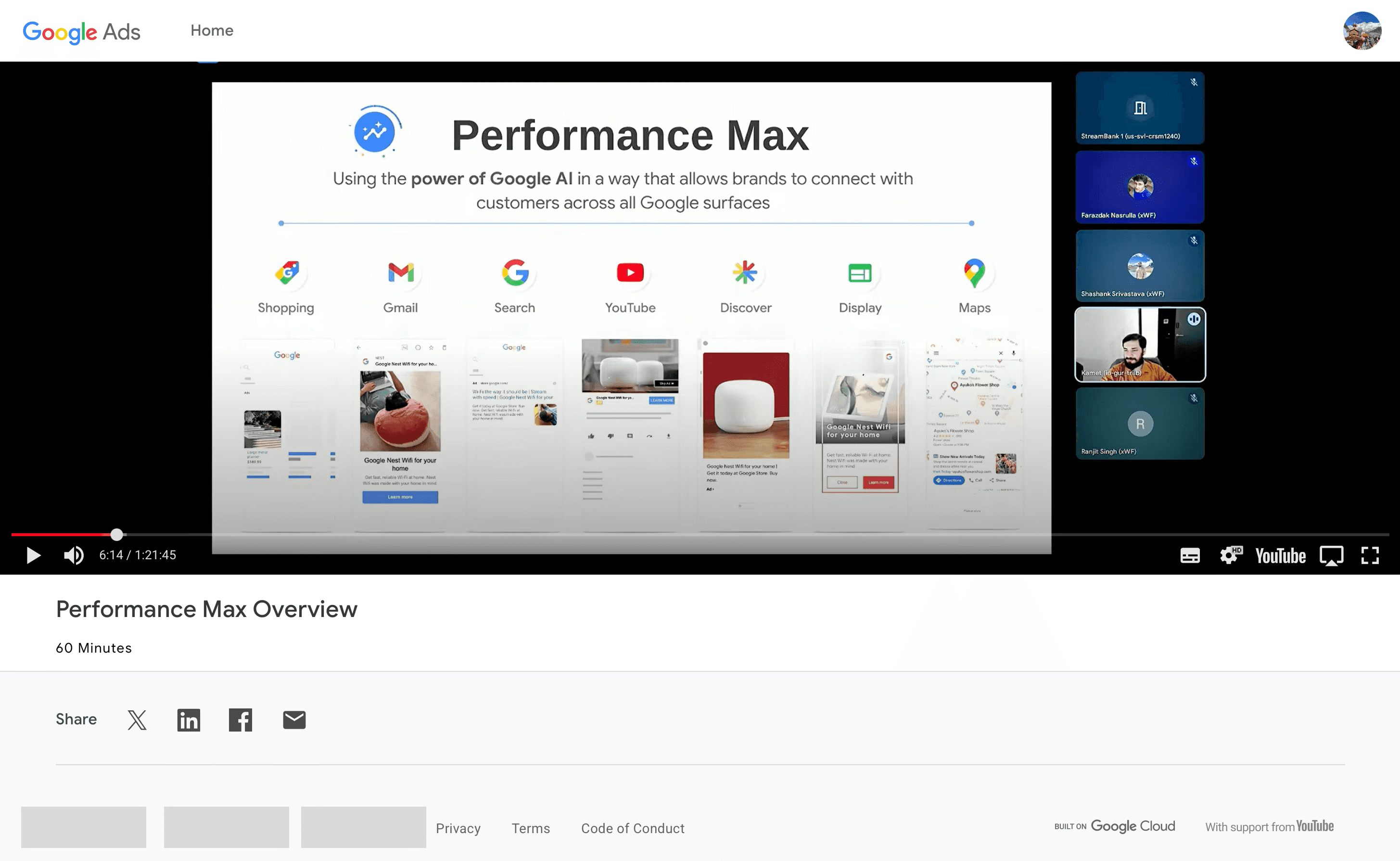
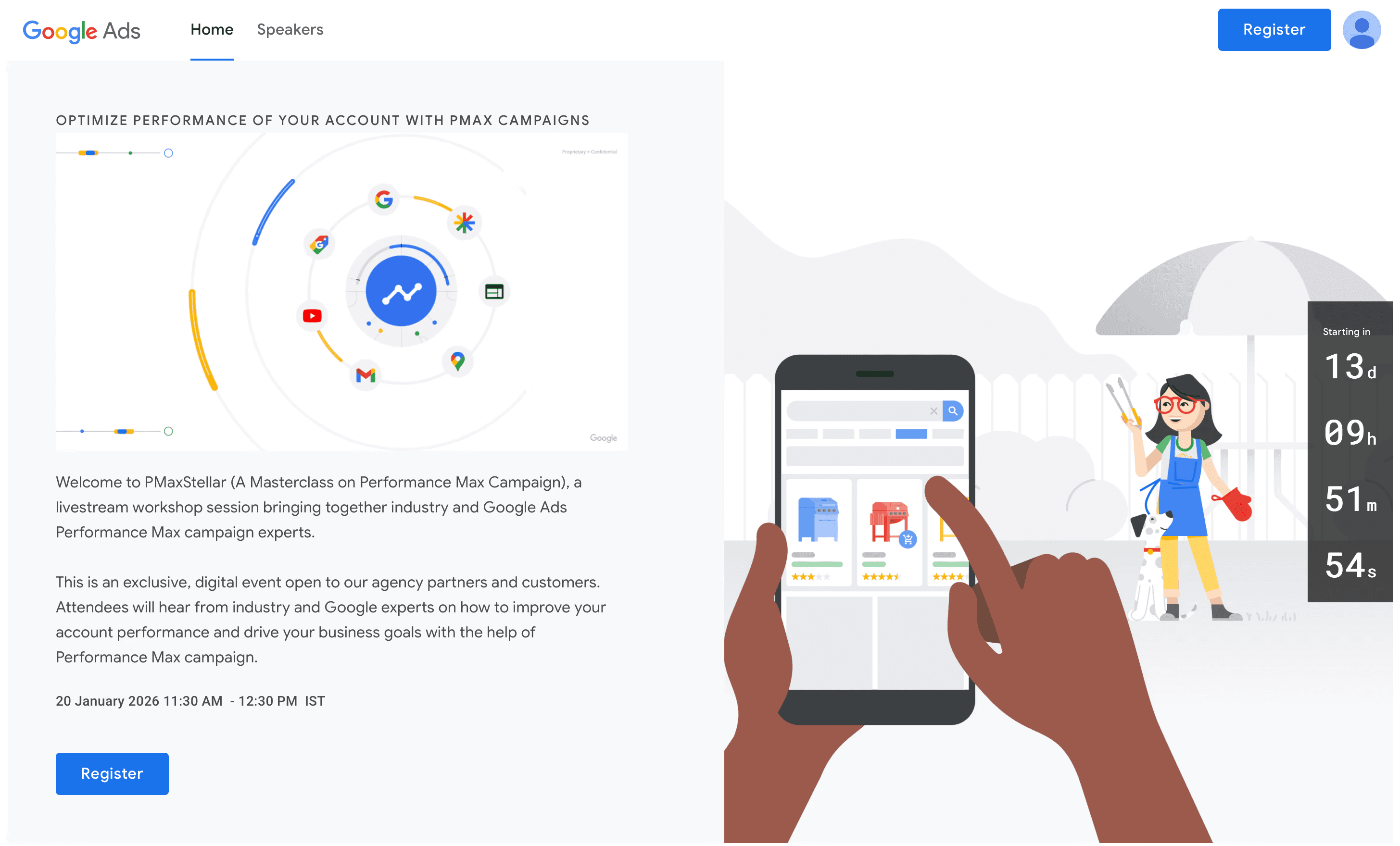
Parity vs. Innovation We looked at the existing "Ads on Air" platform (used for Stellar).
The Opportunity:
We were building Camps from scratch, we had the chance to fix the "One-Way Broadcast" issue inherent in legacy platforms.
The Pivot:
We decided to build a platform that wasn't just a video player, but a Transactional Workshop Hub.
Moving from "Offline Emails" to a "Digital Marketplace" allowed us to introduce features that were impossible before:
Centralized Discovery:
A catalog where partners could browse and register for Camps like the Stellars.
The Active Lobby:
A gamified experience to replace the awkward silence of the Camps sessions.
Live fun activities:
Fun activities that make both the learning and the ads recommendations meaningful and clear to comprehend.
Re-watch Recordings:
Fun activities that make both the learning and the ads recommendations meaningful and clear to comprehend.
After Camp Communication
The camp's comment section can be used for further interaction even for past camps.
The Solution: Building the 'Camps' Marketplace
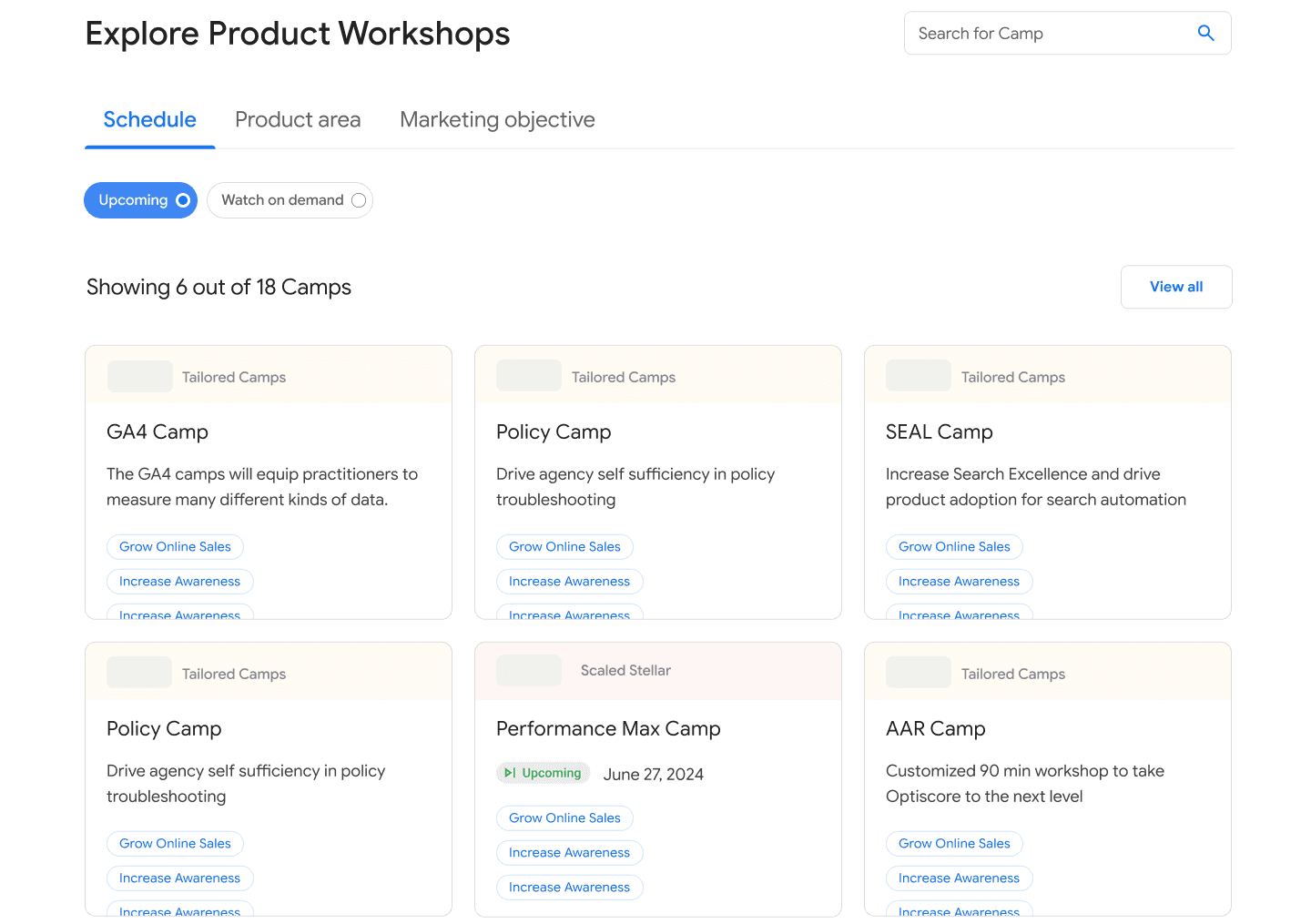
The Home:
The 0-to-1 Workshop Portal
The disjointed email chain is replaced with a single flow: Browse Camp -> Register -> Join Lobby.
In Camp:
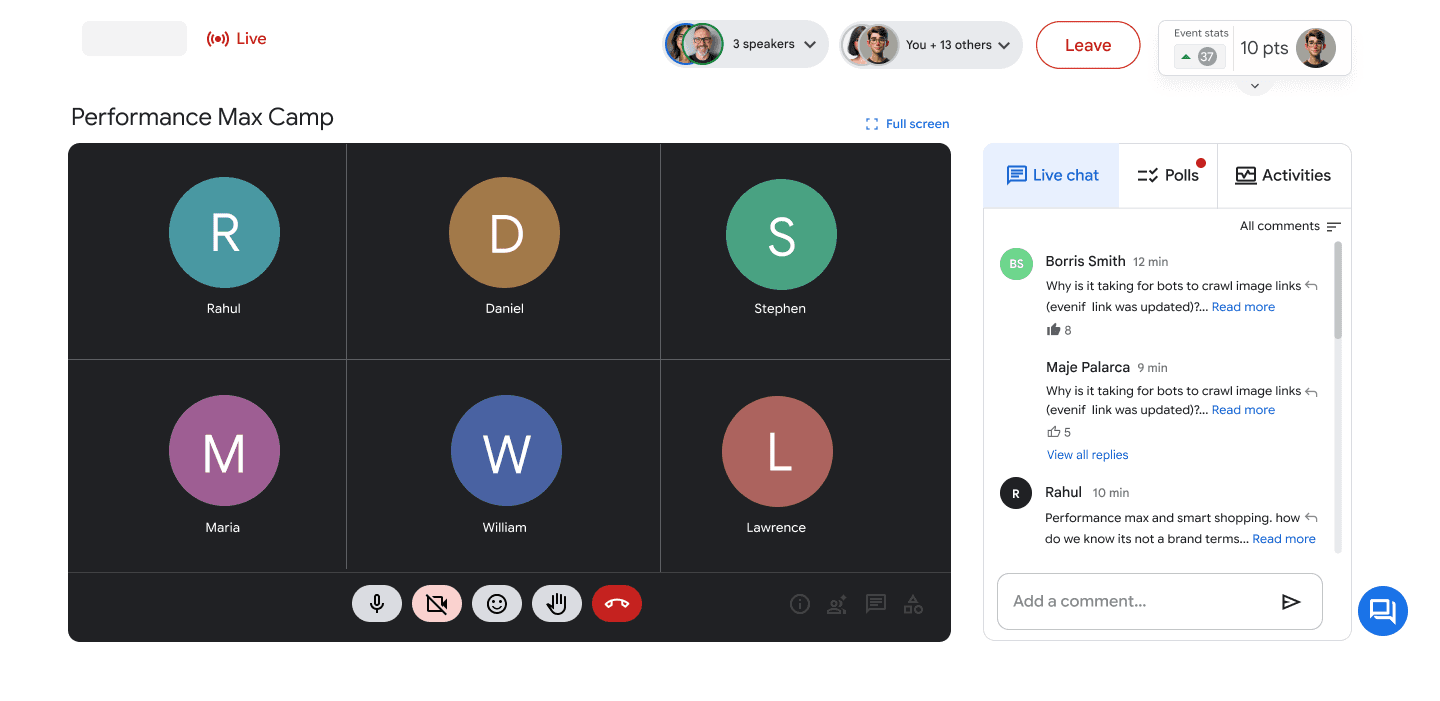
A 2 Way Communication Platform
A 2 way communication platform so that the participants can vote for polls and comment to ask questions and interact with the host throughout the session.
In Camp:
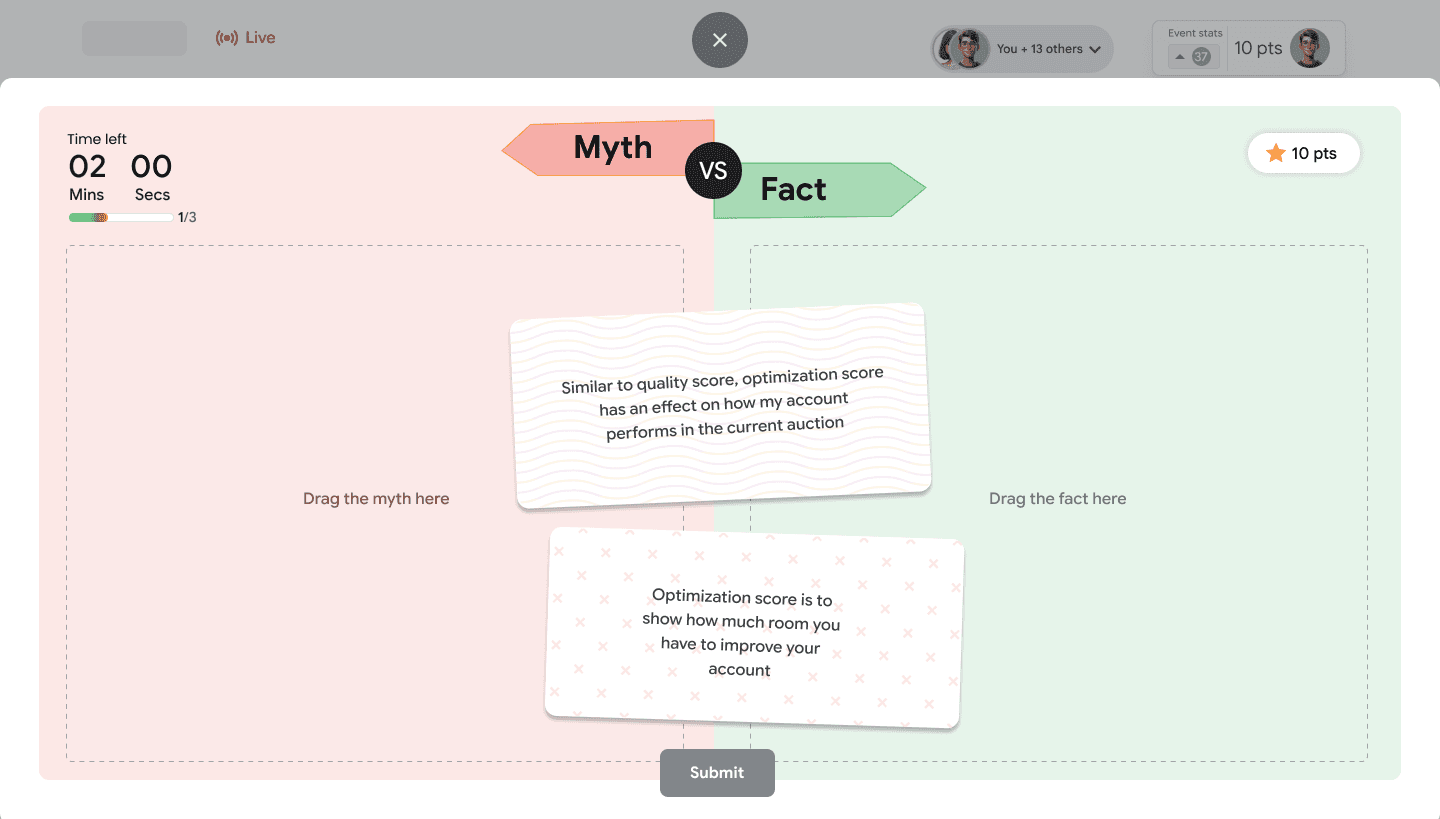
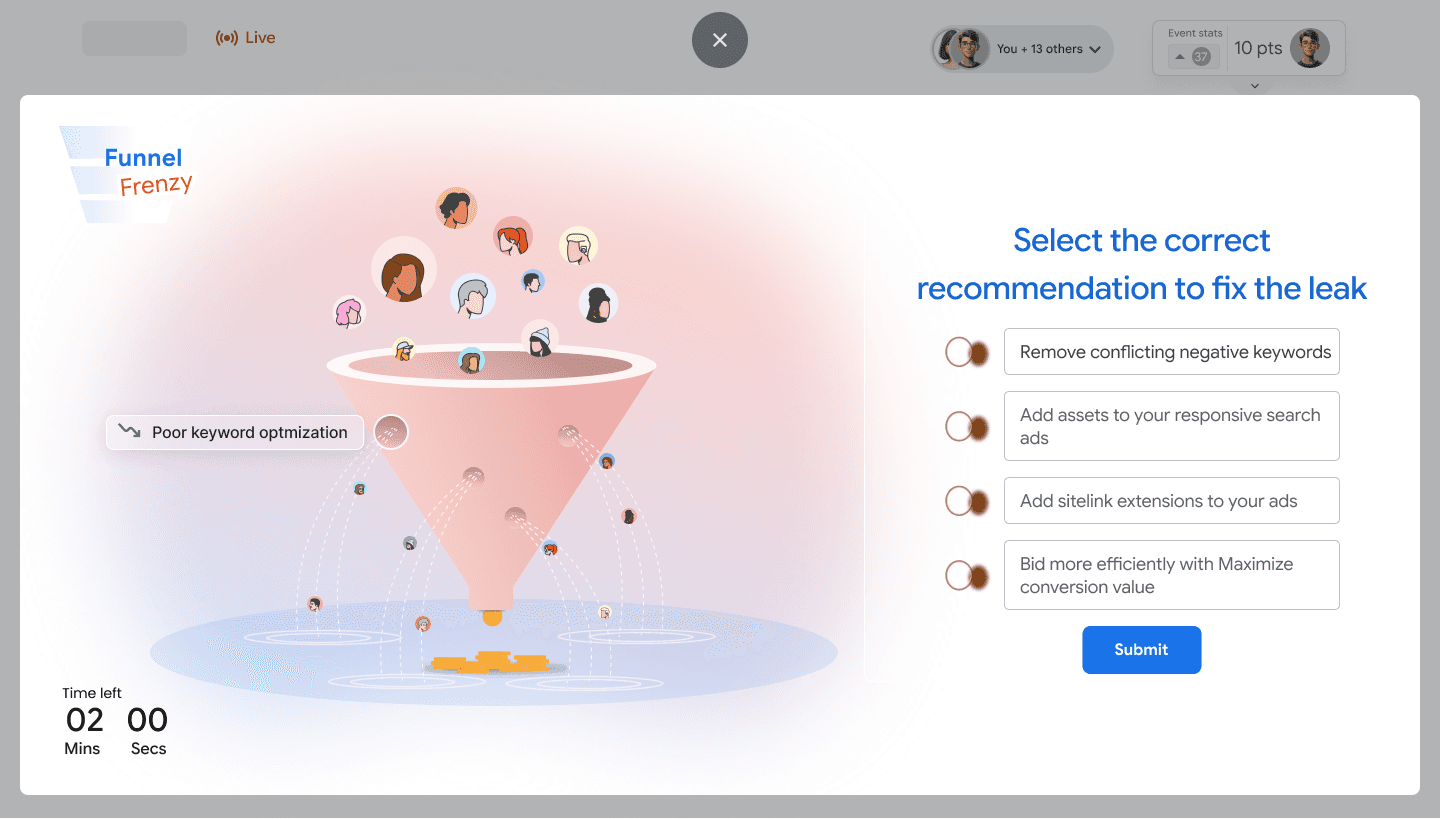
Some of the in-session activities (Active Learning)
Myth Busters:
Partners often held misconceptions about automated ad products (e.g., "Automation takes away my control").
Funnel Frenzy
This is to learn the right solution for the corresponding issues with the campaign.
the Process - Now
1
The particular Account Manager(AM) is reached out periodically over Gmail, when there are updates or new product release from Google Ads.
When the Practioners need a session regarding any product, they request for the same through the request button present on its Camps page.
Facilitator
AM
Practitioners
PEM
2
The camp is scheduled directly in the particular Camps product page based on the expectations and availability communicated by the practiotners in the request form and are notified the same.
Facilitator
PEM
3
The Practitioners attend the camp on the platform.
Facilitator
Practitioners
PEM
4
Post-camp feedback, doubt clarifications and followups are all carried out in the chat and community forum built directly in the platform.
Facilitator
Practitioners
PEM
Technical Constraints (The "Embed" Limit)
Even though we built a new platform, we still had to rely on the core video streaming infrastructure (YouTube Embed) for the actual feed.
The Design Fix:
Since we couldn't change the video player, I focused all interaction design on the Overlay Layer (the Lobby and the Spectrum), ensuring the experience felt custom even though the video tech was standard.
The Results (Impact)
Even though we built a new platform, we still had to rely on the core video streaming infrastructure (YouTube Embed) for the actual feed.
The 0-to-1 launch
Successfully designed and launched the first-ever dedicated digital home for LCS Camps, retiring the legacy manual email workflows.
operational efficiency
Reduced the time-to-organize for internal teams by centralizing scheduling and registration.
Growth
The "Camps" module is now being evaluated as the standard for unifying the "Stellar" program in future roadmap phases.
adoption
The gamified lobby feature drove a ~20% increase in pre-session retention compared to the previous baseline of generic video calls.
Retrospective
What I Learned "Building a platform from scratch taught me that structure creates value. By moving 'Camps' out of the inbox and into a designed Marketplace, we didn't just make it easier to join; we elevated the perceived value of the entire program. The 'medium' became the 'message'."