
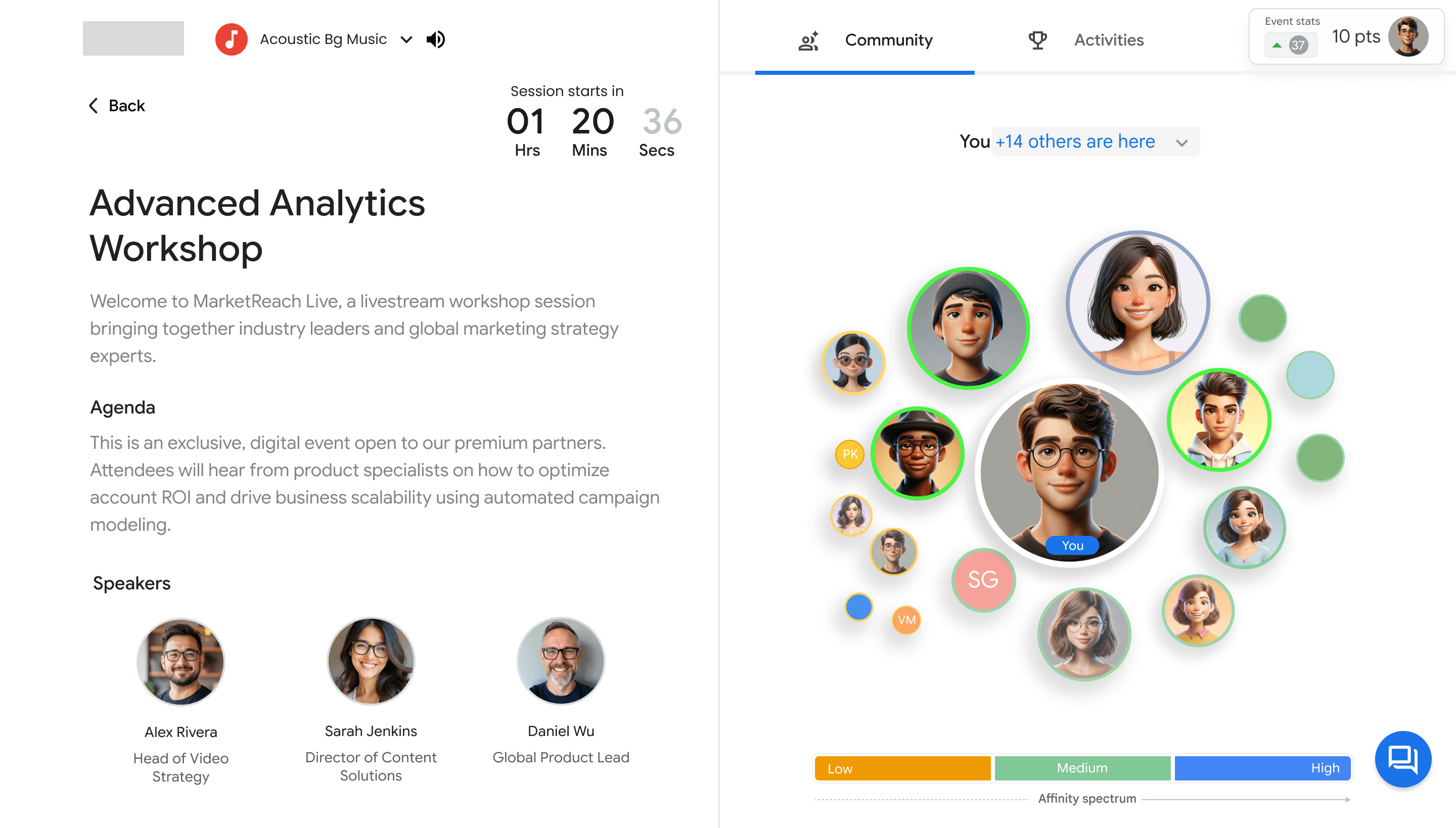
TL;DR
The Challenge:
Enterprise users were struggling to adopt complex ad tech features due to low engagement with existing text-heavy documentation.
My Role:
UI/UX Designer (Interaction Design & Gamification Strategy).
Timeline:
8 Months (Discovery to MVP)
Team:
Collaborated with 1 UX Lead, 1 UI Designer, BA, PM, and Technical Architect (managing FE/BE/QA)
The Goal:
To achieve a 0-to-1 transformation of a passive learning platform into a transactional ecosystem, unifying distinct product lines into a single scalable framework.
The Result:
Doubled product coverage to 100% and drove the first-ever direct product activations by simplifying complex ad-tech concepts through a gamified experience.
Problem + Requirements
The Business Problem: The "Education-to-Action" Gap
Our client (a Fortune 10 Ad-Tech giant) had a rich library of educational content, but it was purely passive. While users were consuming the training materials, they weren't taking action.
The Metric:
There was a significant drop-off between learning about a new ad product and activating it in their accounts.
The Risk:
The platform was failing to drive 'Growth & Adoption' because users treated it as a reading repository rather than a transactional tool for account upgrades.
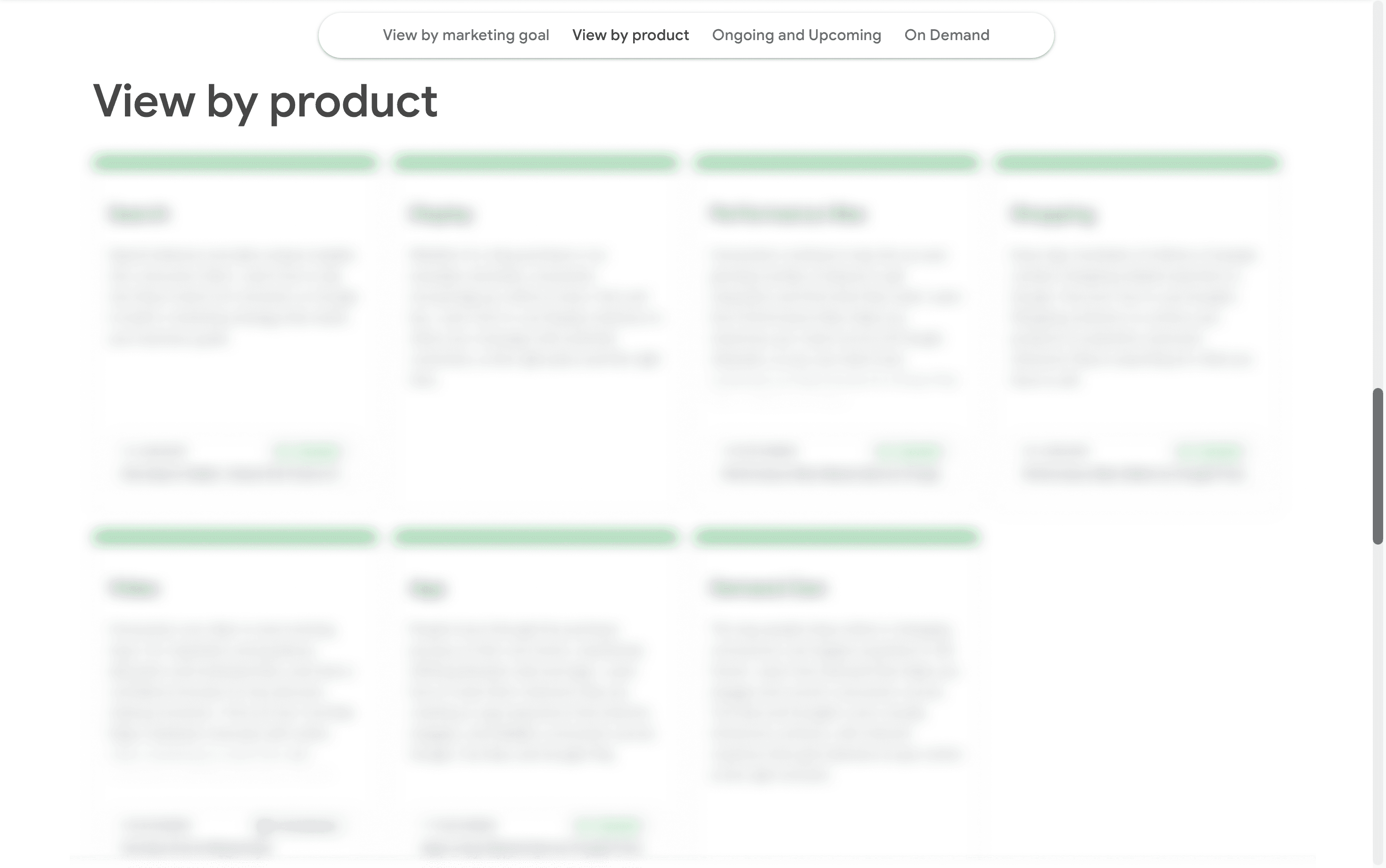
The Users Problem: One way conversation tool
High Churn, Low Action. Since the content felt like a passive lecture, engagement dropped off quickly.
Cognitive Load:
We saw high drop-off rates during the session and near-zero post-session action. The platform was failing to drive "Growth & Adoption" because users lacked the confidence to apply what they learned.
Fragmentation:
Essential product tools were disjointed, forcing users to navigate multiple disparate workflows to achieve a single task.
The Strategy
We needed to shift the product vision from Consumption to Execution. We framed our design strategy around these core "How Might We" questions:
"How might we collapse the time between 'learning a concept' and 'applying it' to zero?" - Activation and upgradation flows built in
"How might we bring the necessary account tools inside the educational interface so the user never has to leave?" - Activation and upgradation flows built in
"How might we make 'taking action' the primary method of learning, rather than reading about it?" - Activities
"How might we provide a 'safety net' that gives users the confidence to experiment with live tools without fear of failure?" - ROI Forecast
"How might we act as an 'active co-pilot' for the user during the setup process, rather than just a lecturer?" - Ad campaign suggestions
The Solution: Designing the Ecosystem
Feature A: In-Flow Activation
Instead of linking out to external tools, we embedded the activation flow inside the educational module and the platform itself.
Why:
This respected the user's workflow. If they are learning about "Advanced Analytics," the flows which required just one click activation, had the activation button easily accessible.
Metric Targeted:
Reduced Time-to-Activation.
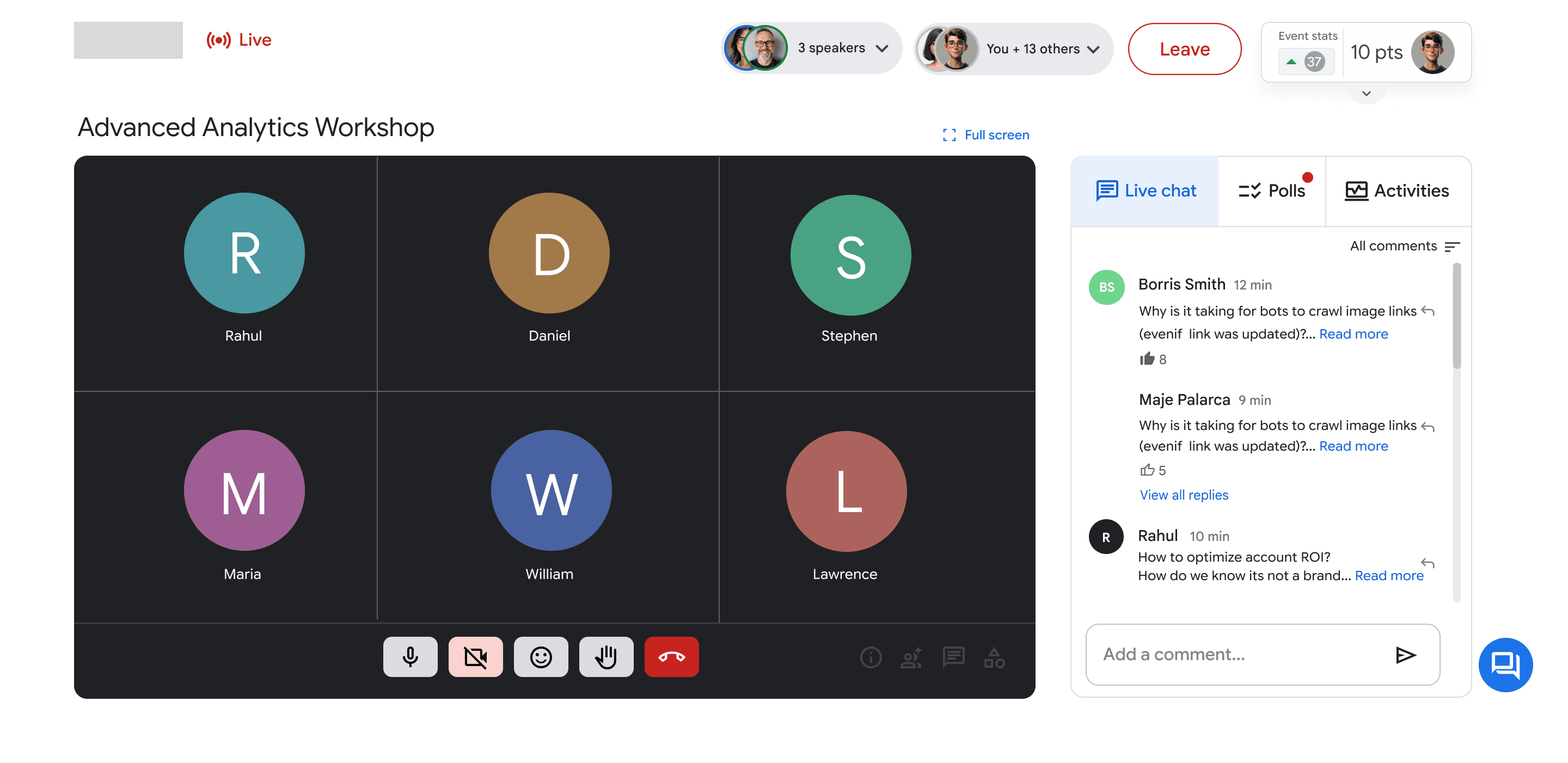
Feature A: In-Flow Activation
Instead of linking out to external tools, we embedded the activation flow inside the educational module and the platform itself.
Why:
This respected the user's workflow. If they are learning about "Advanced Analytics," the flows which required just one click activation, had the activation button easily accessible.
Metric Targeted:
Reduced Time-to-Activation.
Feature A: In-Flow Activation
Instead of linking out to external tools, we embedded the activation flow inside the educational module and the platform itself.
Why:
This respected the user's workflow. If they are learning about "Advanced Analytics," the flows which required just one click activation, had the activation button easily accessible.
Metric Targeted:
Reduced Time-to-Activation.